
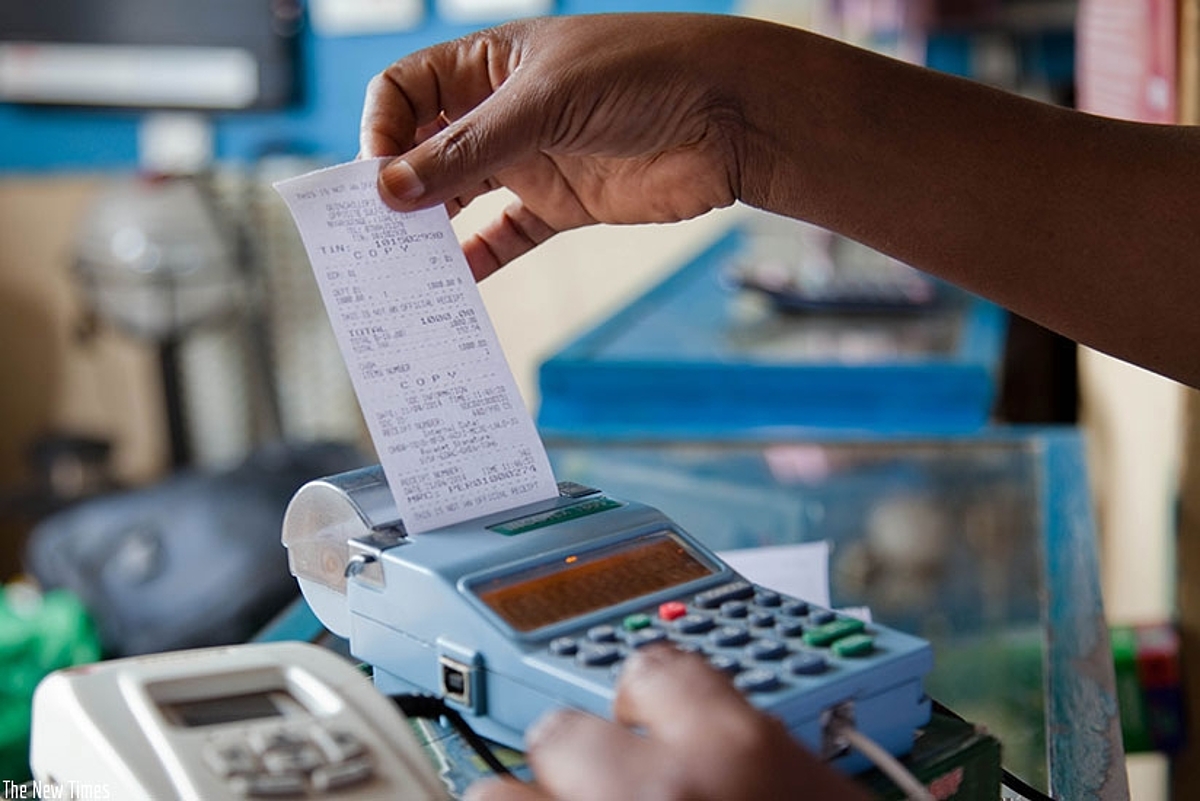
RRA EBM Compliance in Rwanda: What OSDC/VSDC Means for Your Business
RRA EBM compliance is mandatory, but heavy penalties and outdated hardware boxes shouldn't slow your business down.
Electronic Billing Machine (EBM) compliance has been mandatory in Rwanda since 2013. However, in 2026, it remains a major point of confusion for business owners. This isn't because the law is unclear, but because the technology has shifted from physical "black boxes" to seamless cloud integration.
Whether you run a retail shop, a service-based agency, or a large-scale distribution hub, staying compliant is no longer about hardware, it’s about choosing the right software architecture.
What the Law Requires for Every Business
The Rwanda Revenue Authority (RRA) mandates that every registered taxpayer must issue an EBM receipt / invoice for every sale transaction. This applies across the board. From small boutiques to large consultancies regardless of whether you are VAT registered.
Under the Tax Procedures Law of 2023, every transaction (Mobile Money, bank transfer, or cash) must generate a compliant fiscal receipt signed by an RRA authorised Sales Data Controller (SDC). This creates a real-time record linked to your TIN (Taxpayer Identification Number).
VSDC vs. OSDC: Choosing the Right Path
If you are moving your business to the cloud, understanding the difference between these two integration paths is critical for your operational uptime.
VSDC (Virtual Sales Data Controller)
VSDC is an on-premise path. It requires a local Java-based application running on a computer at your physical place of business.
- The Risk: If your local computer crashes, loses power, or has a Windows update at 2:00 PM, your ability to issue legal receipts stops instantly.
- Maintenance: You are responsible for local software updates and certificate renewals.
OSDC (Online Sales Data Controller)
OSDC is the modern, cloud-native path. Your invoicing software communicates directly with RRA’s OSDC API over HTTPS.
- The Benefit: There is no local hardware to maintain. The "signing" of the receipt happens in the cloud.
- Reliability: As long as you have an internet connection to process the sale, you are compliant. It eliminates the "single point of failure" at your shop or office.
If a software vendor offers you a "Cloud System" but insists on installing a local VSDC driver on your laptop, you are still tethered to old hardware risks. True modern SaaS uses OSDC, No need for VSDC box configuration on your computer.
Anatomy of a Valid EBM Fiscal Receipt
In Rwanda, a receipt is only legal if it contains specific cryptographic data. RRA inspectors and customers using the Tengamara reward programme frequently check for these nine elements:
| Field | Requirement |
|---|---|
| Taxpayer TIN | Your registered Business TIN |
| SDC ID | The ID of the Controller that signed the transaction |
| Receipt Number | Sequential format (e.g., 150 / 4500) |
| Receipt Type | Code for the transaction (e.g., NS for Normal Sale) |
| Date and Time | Format: ddmmyyyy hhmmss |
| Itemised Lines | Clear description, quantity, and unit price |
| Tax Breakdown | Calculations for Classes A, B, C, and D |
| QR Code | Must resolve to the RRA verification portal |
| Signature | The cryptographic hash generated by the SDC |
The "Tengamara" Factor: Your Customers are Auditors
The QR code on your receipt is more than a technicality. Launched in 2024, the Tengamara programme incentivizes consumers to verify receipts.
- Customers receive 10% of the VAT back on valid receipts they submit.
- Customers can receive 50% of the fine if they report a business for failing to issue a valid EBM receipt.
- A receipt without a QR code, or with a QR code that doesn't "scan," is a direct liability to your business.
Understanding Tax Classes in Rwanda
Your billing system must correctly categorize every item in your inventory or service list:
- Class A (Exempt): 0% VAT (e.g., certain health services, books, or unprocessed minerals).
- Class B (Standard): 18% VAT (The default for most retail goods and professional services).
- Class C (Zero-Rated): 0% VAT (e.g., exported goods or specific pharmaceutical products).
- Class D (Zero-Rated): Special categories.
Note: Even if your items are Class A or C (0%), they must still be processed through an EBM to be legal.
The Cost of Non-Compliance
Penalties in the 2025–2026 fiscal cycle are strictly enforced to broaden the tax base:
- First Offence: Fine of 10 times the evaded VAT.
- Repeat Offence: Fine of 20 times the evaded VAT.
- Operational Risk: Temporary business closure (up to 30 days) and public listing of non-compliant taxpayers.
The CIS Certification: What to Ask Your Software Vendor
Before committing to any Business Management or ERP software, you must verify their CIS (Computerised Invoicing System) status.
Ask the vendor: "Is your software RRA CIS Certified, and what is your Developer ID?"
Without this certification, the software cannot legally connect to the RRA OSDC API. Using uncertified software to "simulate" receipts is considered fraud and carries heavy criminal penalties.
Introducing the RRA EBM SDKs
Integrating with tax authorities can be complex, but it doesn't have to be. To help developers and businesses bridge the technical gap, we are excited to introduce the RRA EBM SDKs—developer-friendly packages for integrating with the Rwanda Revenue Authority’s OSDC/VSDC API.
Whether you’re working on POS integrations, Accounting & ERP systems, or custom business applications, these SDKs make it easier to build compliant Node.js, PHP, and Python applications that generate and manage fiscal invoices programmatically.
✨ Key Features
- Fully typed request/response models (for TypeScript/JS)
- Built-in authentication and certificate management
- AES/RSA encryption utilities handled out-of-the-box
- Modular and extensible architecture
- Ready-to-use examples & tests for fast onboarding
📦 Available Packages & Resources
TypeScript / Node.js:
- 📍 GitHub:
rra-ebm-js-sdk
PHP:
- 📍 GitHub:
rra-ebm-php-sdk
Python:
- 📍 GitHub:
rra-ebm-python-sdk
Huge thanks to everyone contributing, testing, and sharing feedback — your support keeps improving this project! 🙌
Conclusion: Automate Your Compliance
Modern business moves too fast for manual EBM entry or unreliable local middleware. By switching to a cloud-based platform with native OSDC integration, you ensure that every "Print" or "Email Receipt" click is a guaranteed moment of compliance.